Air Fryer Salmon (Lemon Herb, 12 Minutes)
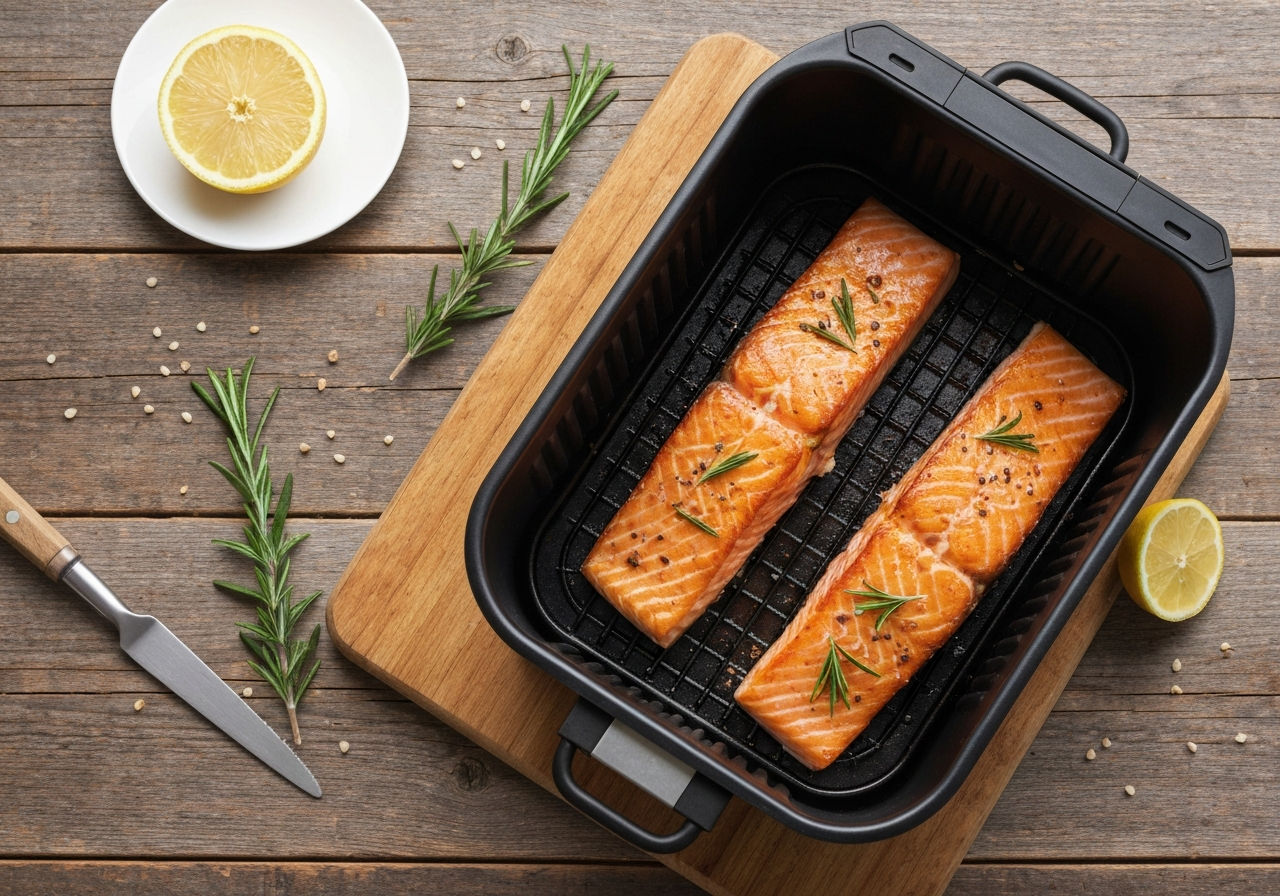
I'll be honest — for years, I was the person who ordered salmon at restaurants but never cooked it at home. It felt fussy. Pan-searing seemed to require some sort of restaurant-level sixth sense about when to flip, and baking it in the oven always felt like a gamble between "is it done yet?" and "oh no, it's a hockey puck." Then I tried the air fryer, and it was like someone turned on the easy button.
The air fryer does something special with salmon. The hot circulating air crisps the outside — especially the skin if you leave it on — while the inside stays tender and flaky. And since the fillets are relatively thick, the exterior has time to develop a little color before the inside overcooks. The whole thing takes about 12 minutes, which means dinner is on the table before you could even decide what to order from a delivery app.
The lemon-herb seasoning I use here is dead simple: olive oil, fresh lemon, garlic, and a few dried herbs. Nothing fancy, nothing complicated. It lets the salmon flavor come through while adding just enough brightness to make everything pop. This has become my go-to Tuesday night dinner — the one I make when I'm tired and don't want to think too hard about food but still want something that tastes like I put in effort.
Ingredients
- 4 salmon fillets (6 oz / 170g each), skin-on or skinless
- 2 tbsp olive oil
- 2 tbsp fresh lemon juice (about 1 lemon)
- 1 tsp lemon zest
- 3 cloves garlic, minced
- 1 tsp dried Italian seasoning (or a mix of dried oregano and thyme)
- 1/2 tsp smoked paprika
- 1/2 tsp fine sea salt
- 1/4 tsp freshly ground black pepper
- 1 tbsp fresh dill, chopped (or parsley)
- Lemon wedges for serving
Instructions
- Prep the salmon. Take the fillets out of the fridge and pat them dry with paper towels. Let them sit on the counter for about 10 minutes to take the chill off. Cold fish going into a hot air fryer can cook unevenly — room temperature fillets cook much more consistently.
- Make the seasoning paste. In a small bowl, mix together the olive oil, lemon juice, lemon zest, minced garlic, Italian seasoning, smoked paprika, salt, and pepper. Stir it into a loose paste.
- Season the fillets. Brush or spoon the mixture generously over the top and sides of each fillet. Don't bother with the skin side if you're using skin-on — it doesn't need seasoning and the skin will get crispy on its own.
- Preheat the air fryer to 400°F (204°C) for 3 minutes. Lightly spray or brush the basket with oil to prevent sticking.
- Cook the salmon. Place the fillets in the basket skin-side down, leaving about an inch between each piece. Cook at 400°F for 7–10 minutes. The exact time depends on the thickness of your fillets:
- 3/4 inch thick: 7 minutes
- 1 inch thick: 8–9 minutes
- 1 1/4 inch thick: 10–12 minutes
- Check for doneness. The salmon is ready when it flakes easily with a fork and the internal temperature reads 145°F (63°C). If you prefer it medium (slightly translucent in the very center), pull it at 125°F — the carryover heat will bring it up a few more degrees as it rests.
- Garnish and serve. Transfer to plates, top with fresh dill, and serve with lemon wedges. I like to give each fillet a final squeeze of fresh lemon right at the table.
Tips for Perfect Air Fryer Salmon
Variations
Teriyaki Glazed Salmon
Skip the lemon-herb mixture. Instead, brush fillets with a glaze of 3 tbsp soy sauce, 2 tbsp honey, 1 tbsp rice vinegar, 1 tsp sesame oil, and 1 tsp grated fresh ginger. Cook as directed and brush with more glaze when there are 2 minutes left. Finish with sesame seeds and sliced green onions.
Cajun Blackened Salmon
Rub fillets with 1 tbsp olive oil, then coat with a mix of 1 tsp each: paprika, garlic powder, onion powder, plus 1/2 tsp each cayenne, dried thyme, and dried oregano. The air fryer gets the spice crust beautifully dark without the smoke you'd get from a cast iron pan.
Maple Dijon Salmon
Whisk together 2 tbsp real maple syrup, 1 tbsp Dijon mustard, 1 tbsp soy sauce, and 1 minced garlic clove. Brush over the fillets before cooking. The maple-Dijon combo caramelizes in the air fryer and creates this gorgeous, slightly sweet crust.
Mediterranean Salmon
Top each seasoned fillet with a spoonful of olive tapenade or a mix of diced cherry tomatoes, kalamata olives, capers, and fresh basil. The toppings warm through while the salmon cooks underneath. Serve over orzo or couscous.
Nutrition Facts
Nutrition per Serving
| Calories | 350 |
| Total Fat | 20g |
| Saturated Fat | 3.5g |
| Carbohydrates | 2g |
| Protein | 38g |
| Sodium | 380mg |
| Cholesterol | 95mg |
FAQ
How do I know when air fryer salmon is done?
The best way is with an instant-read thermometer — 145°F (63°C) for fully cooked, 125°F for medium. Without a thermometer, press the top of the fillet gently with a fork. If it flakes apart easily and the flesh is opaque all the way through, it's done. The flesh will also feel firm but still have a little give.
Should I use skin-on or skinless salmon?
I prefer skin-on in the air fryer. The skin gets wonderfully crispy (almost like a chip), and it acts as a natural barrier between the fish and the basket so the fillet doesn't stick. Plus, the skin holds the fillet together so it doesn't fall apart when you move it. If you use skinless, parchment paper in the basket is your friend.
Can I cook frozen salmon in the air fryer?
You can, though thawed is better for even cooking and seasoning. If cooking from frozen, add 3–5 minutes to the cook time and season about halfway through once the surface has thawed enough for the seasoning to adhere. Frozen fillets tend to release more moisture, so the texture won't be quite as nice.
Why is my air fryer salmon dry?
Overcooking is almost always the reason. Salmon keeps cooking for a minute or two after you take it out of the air fryer thanks to residual heat, so pulling it out a touch early is actually the right move. Also, look for thicker fillets — thin tail pieces dry out much faster than center-cut portions.
What should I serve with air fryer salmon?
Rice (white, brown, or cauliflower rice), roasted asparagus, a green salad, or roasted sweet potatoes all work well. For a full air fryer meal, roast your vegetables in the air fryer first, keep them warm, then cook the salmon. Dinner done with one appliance.
More Recipes You Might Like
- Baked Salmon — oven-baked version with similar flavors
- Garlic Butter Shrimp — another fast seafood dinner
- Lemon Garlic Salmon — pan-seared take on the same combo
- Air Fryer Chicken Wings — more air fryer goodness